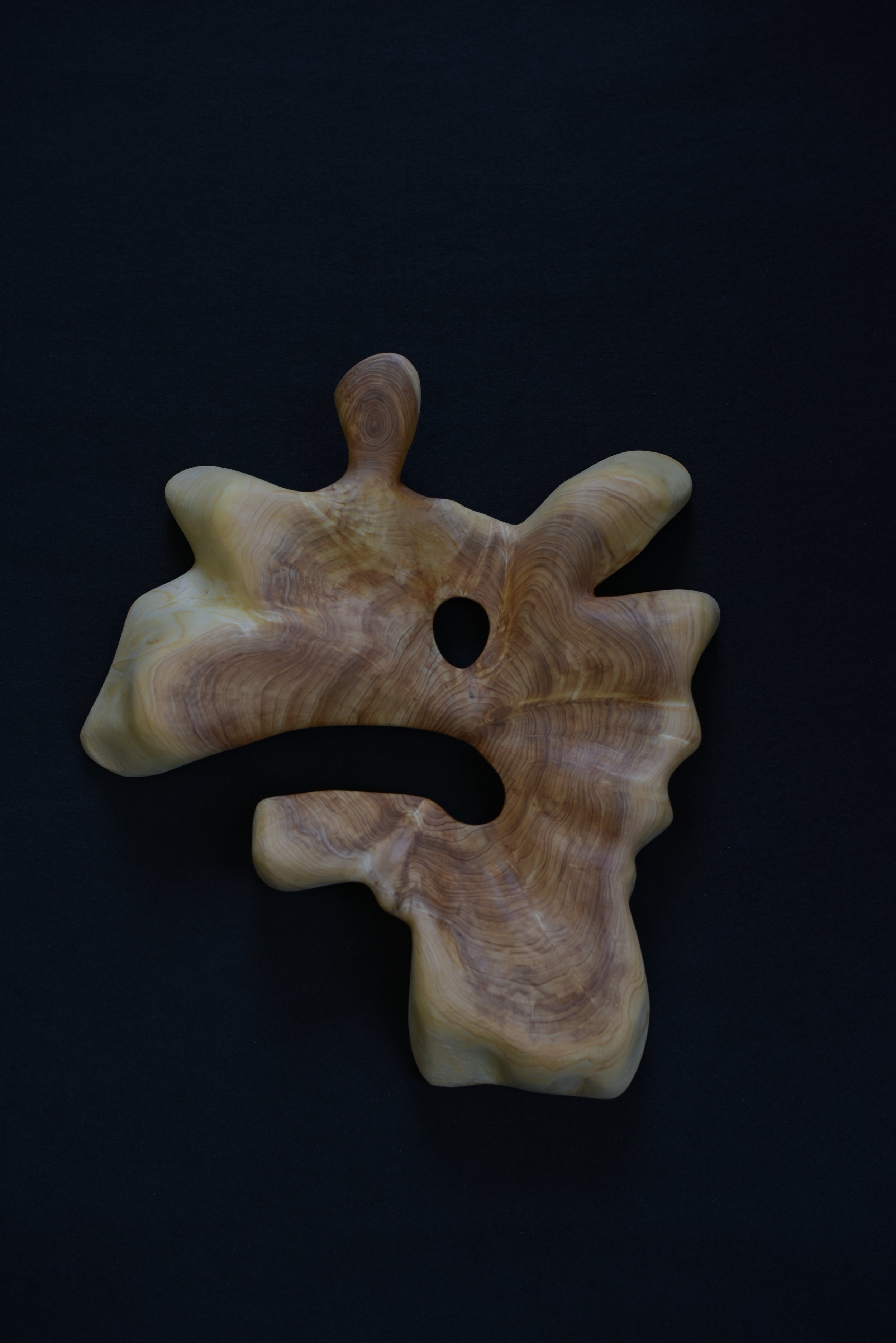
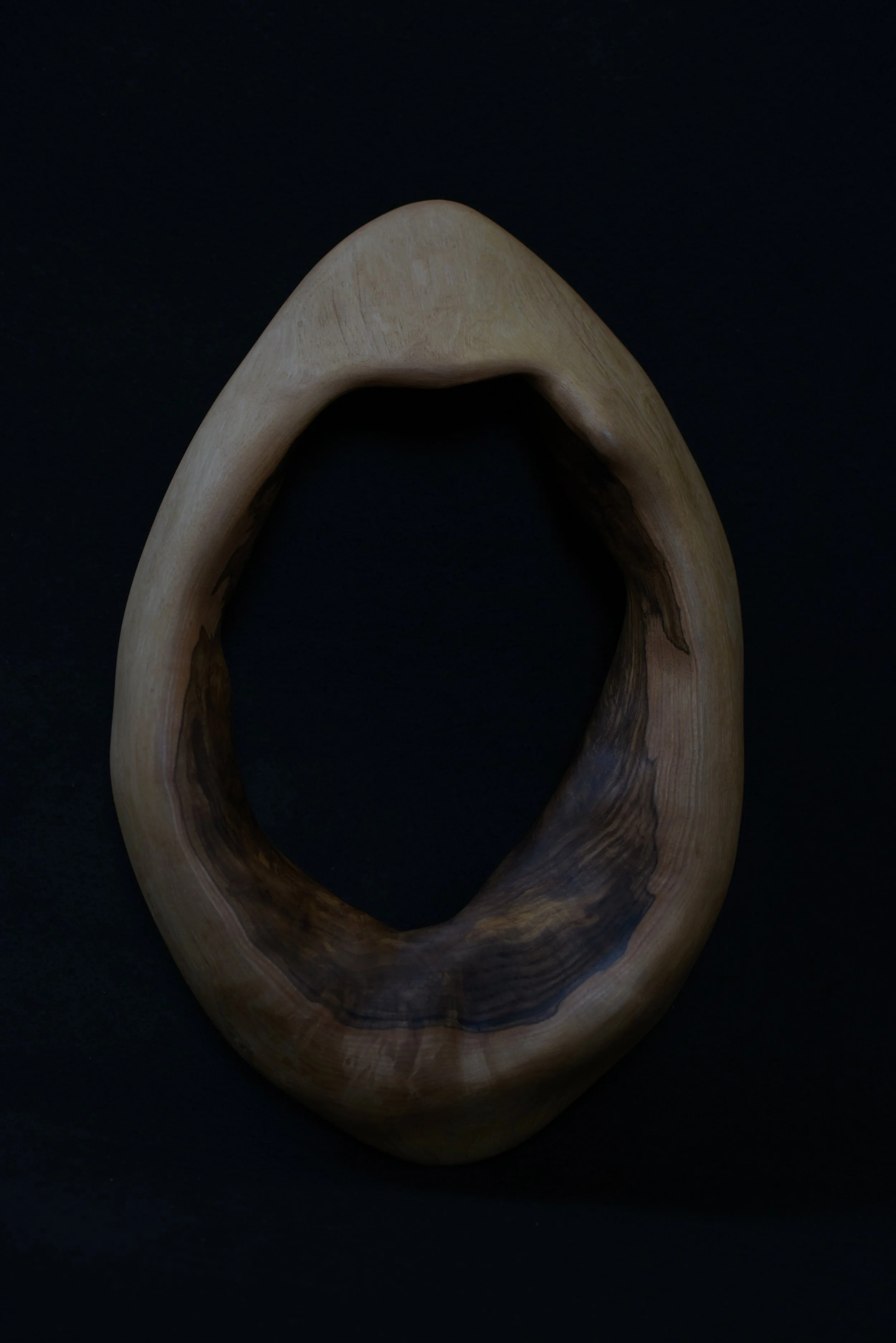
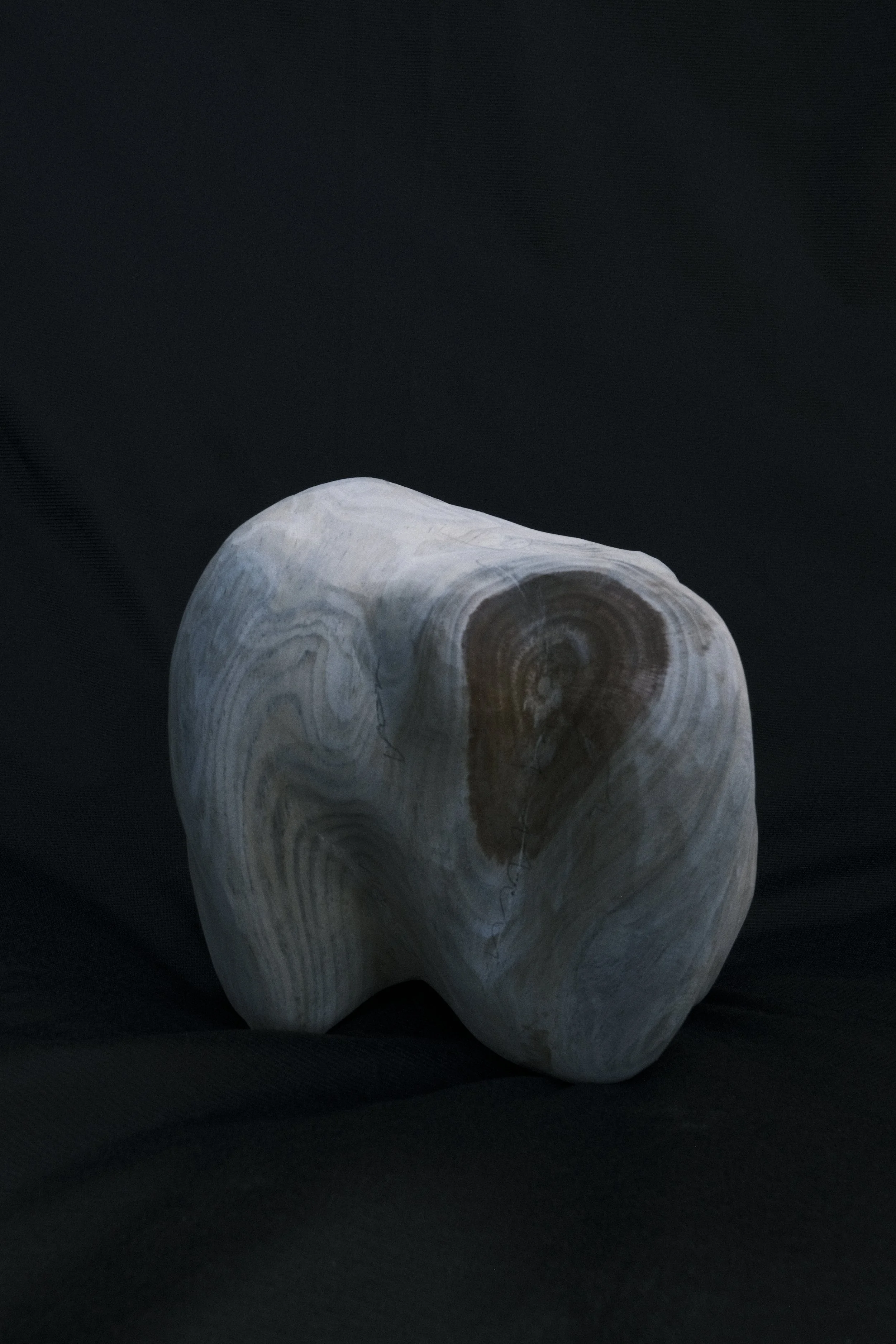
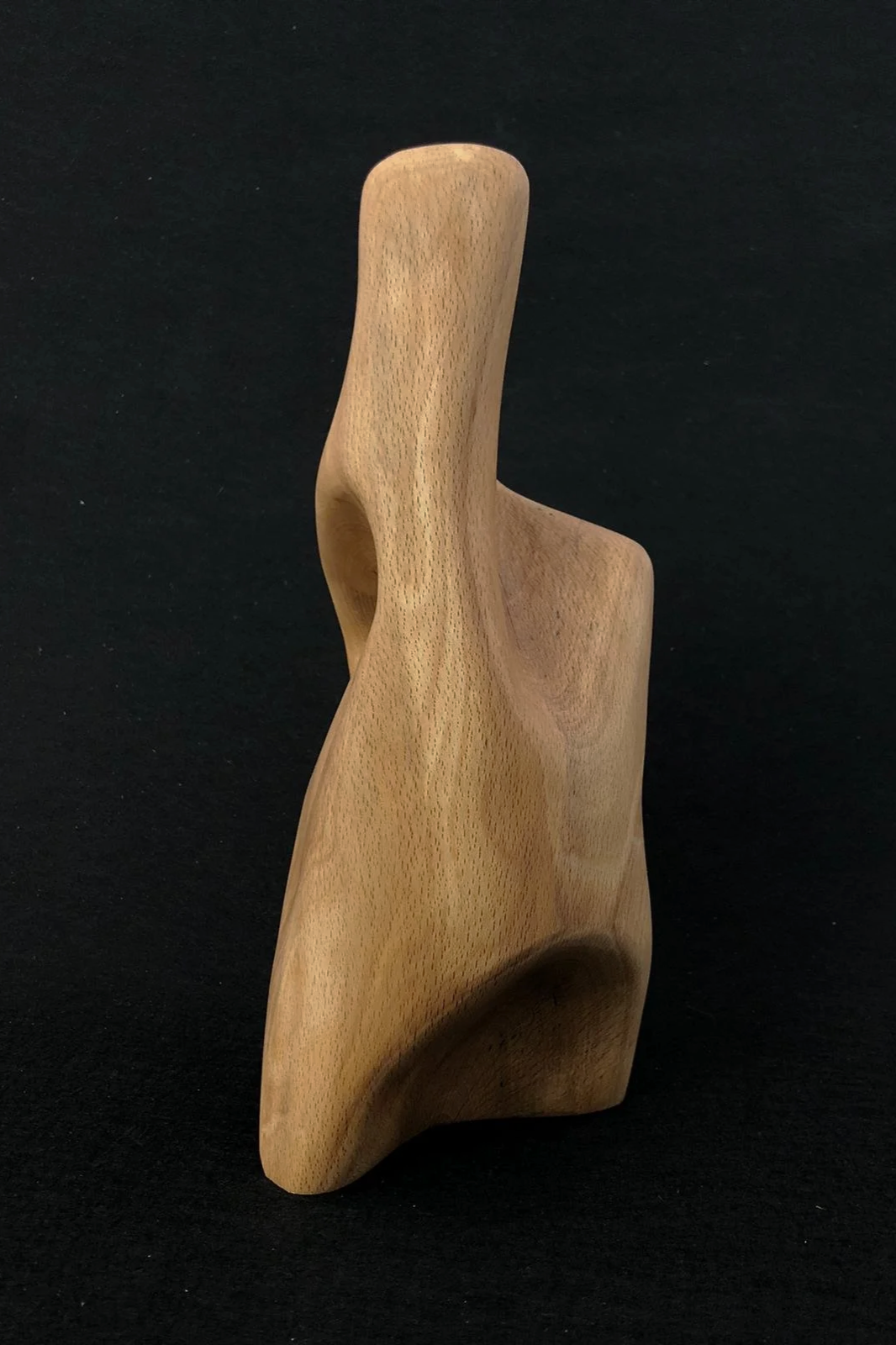
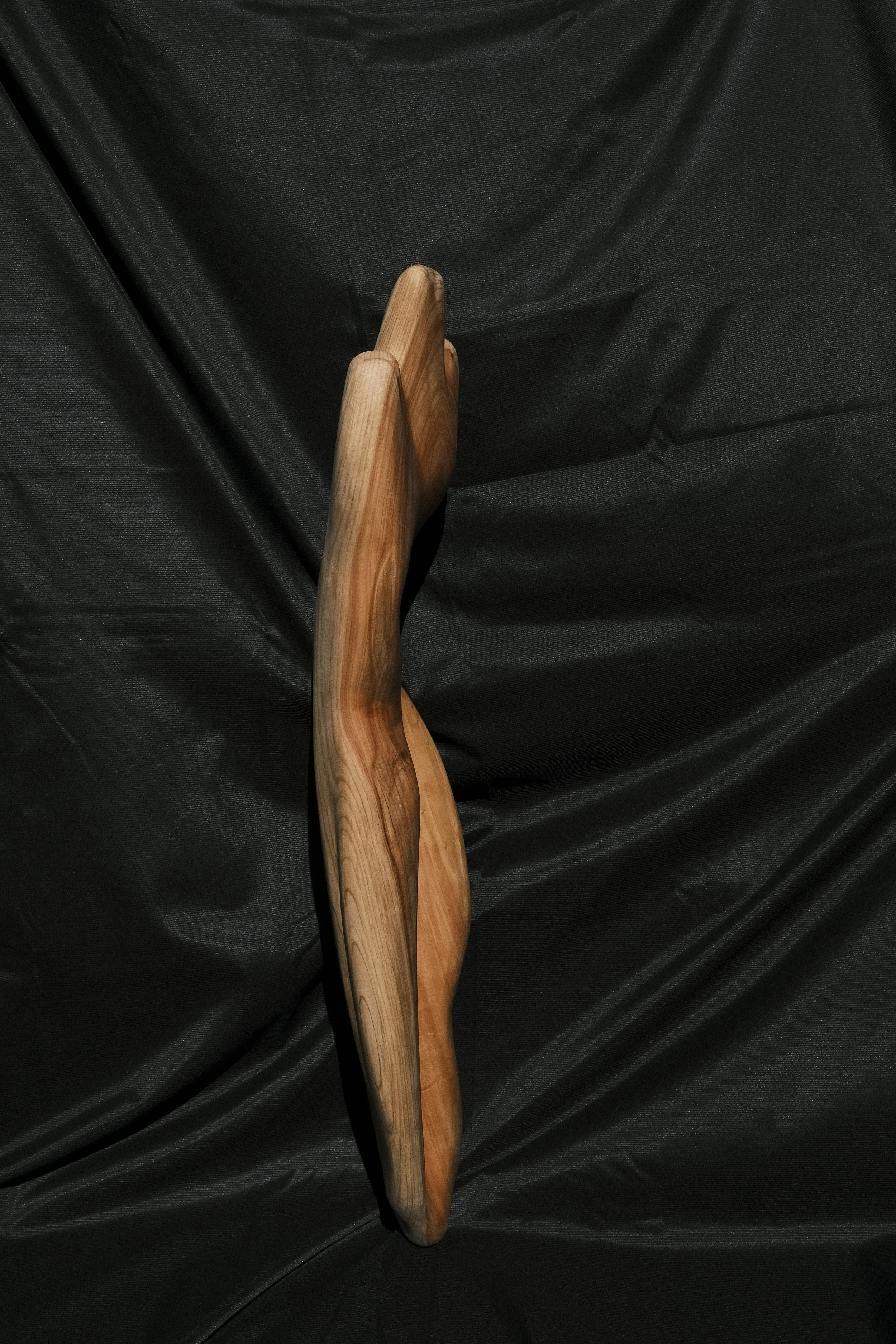
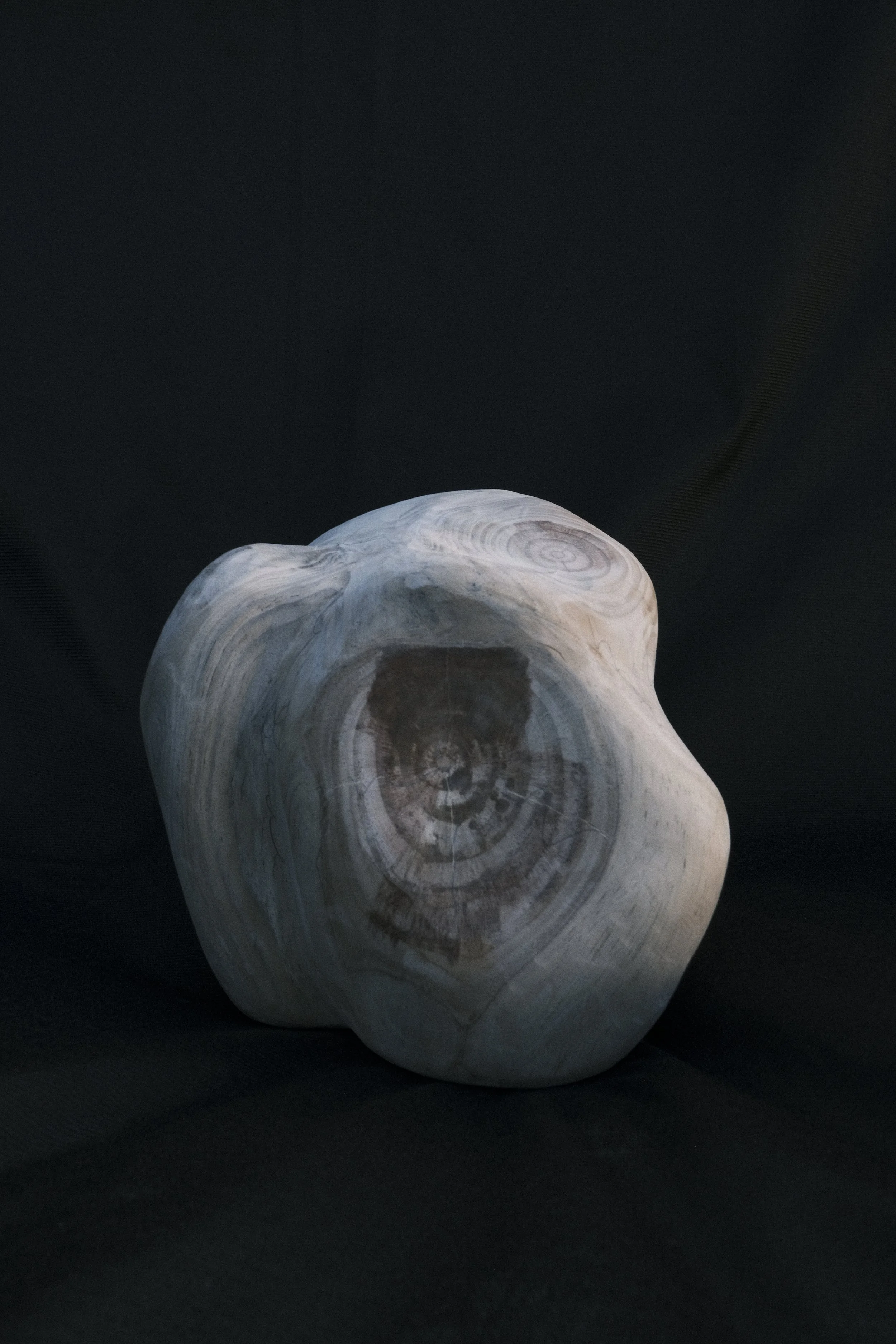
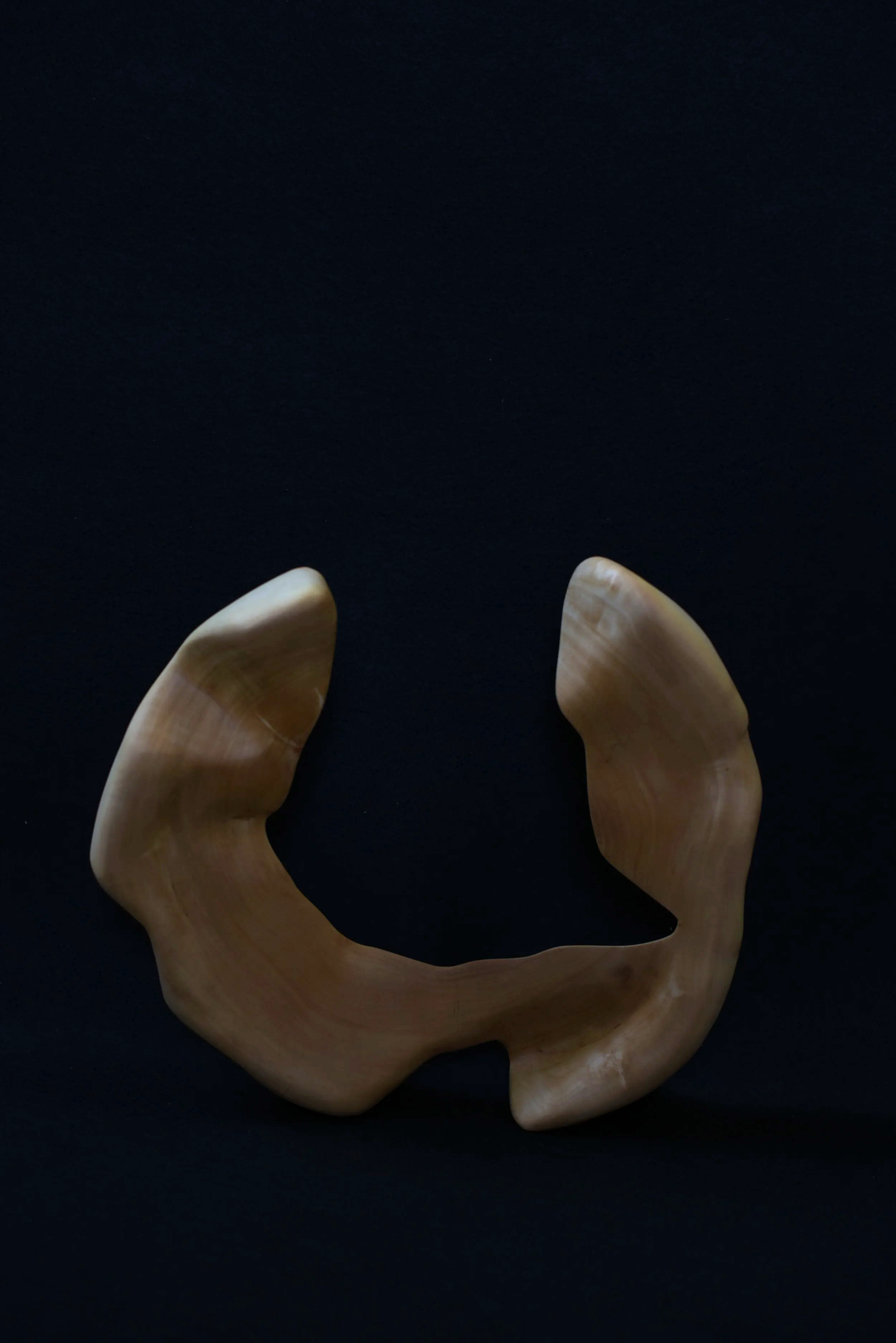
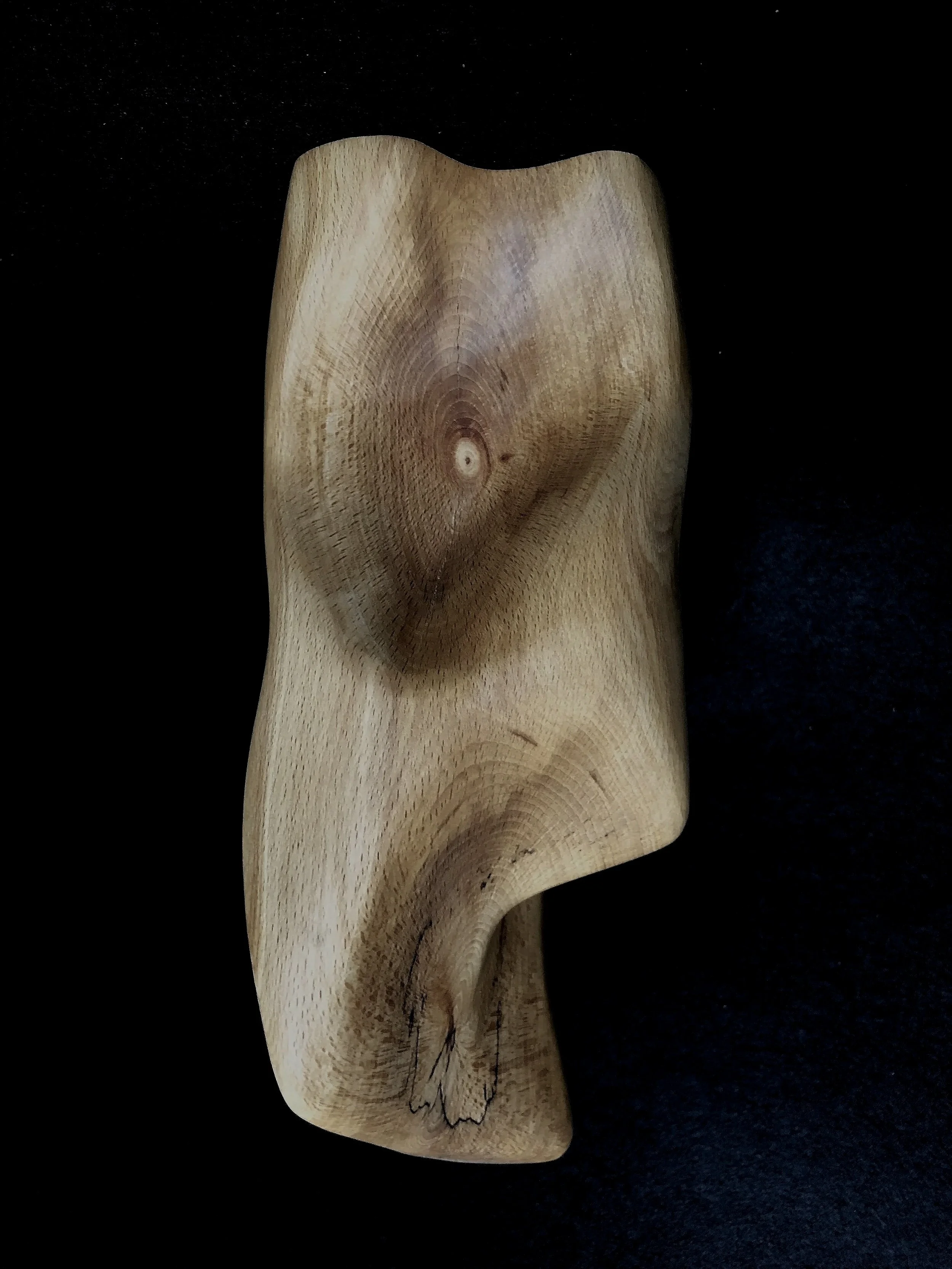
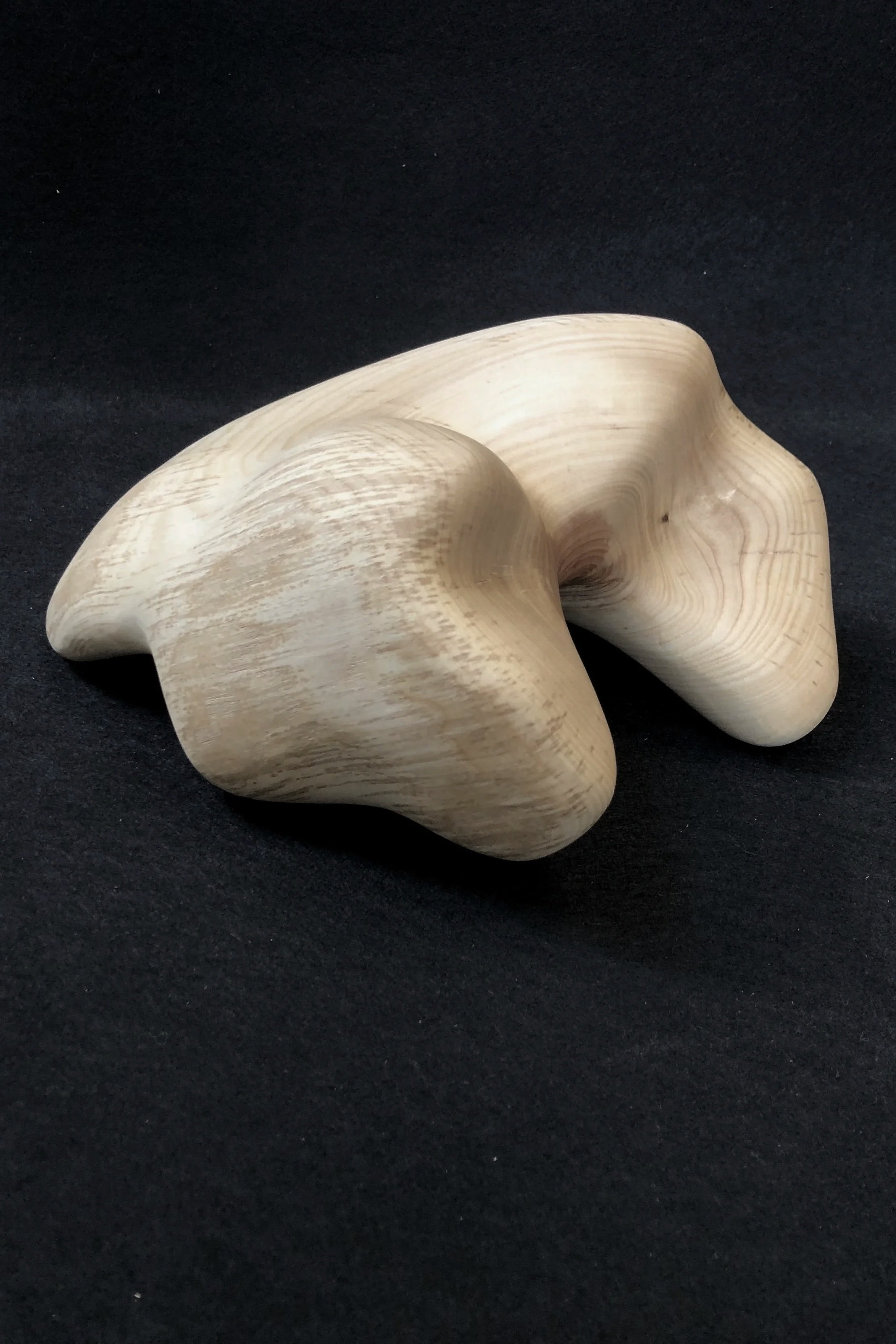
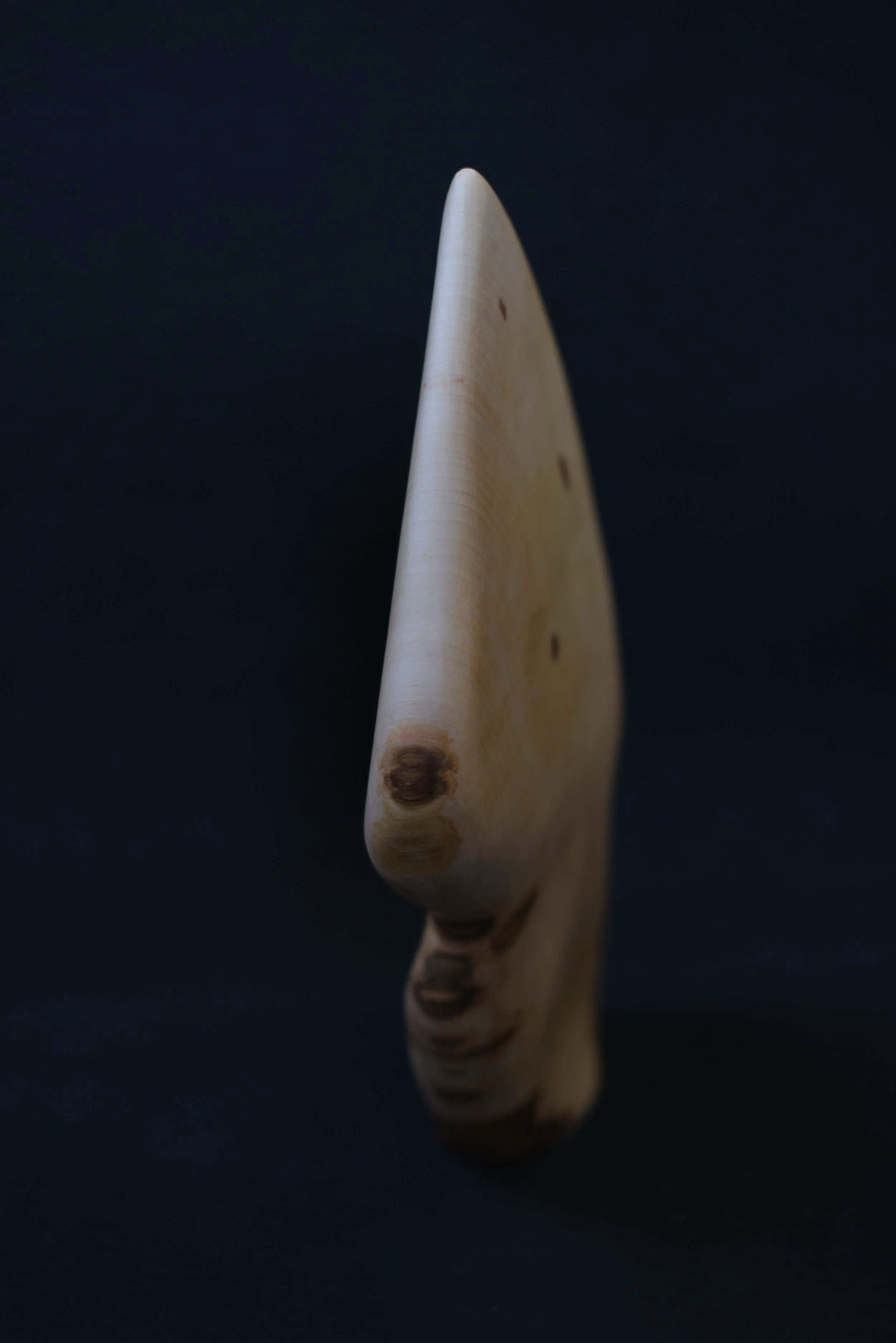
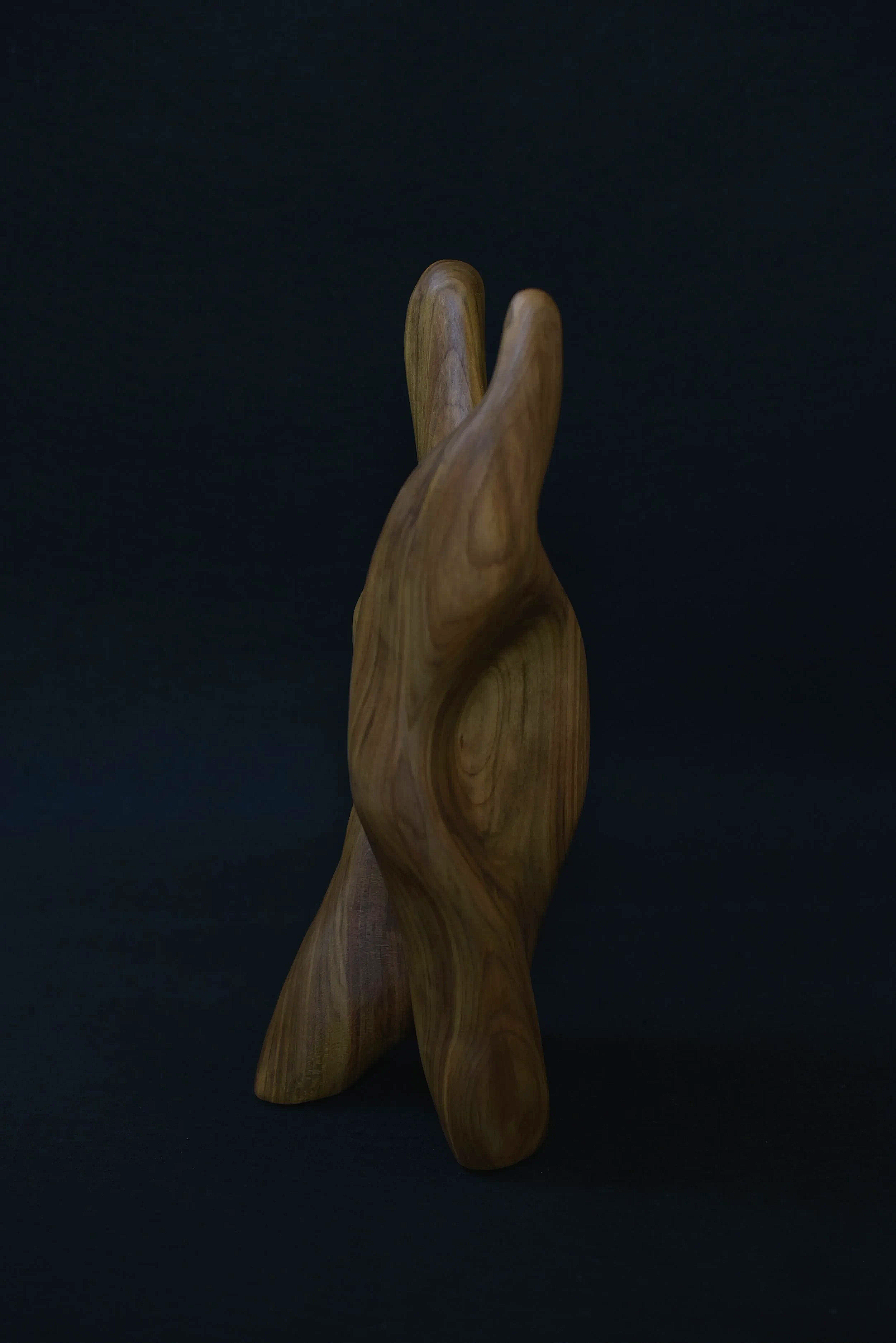
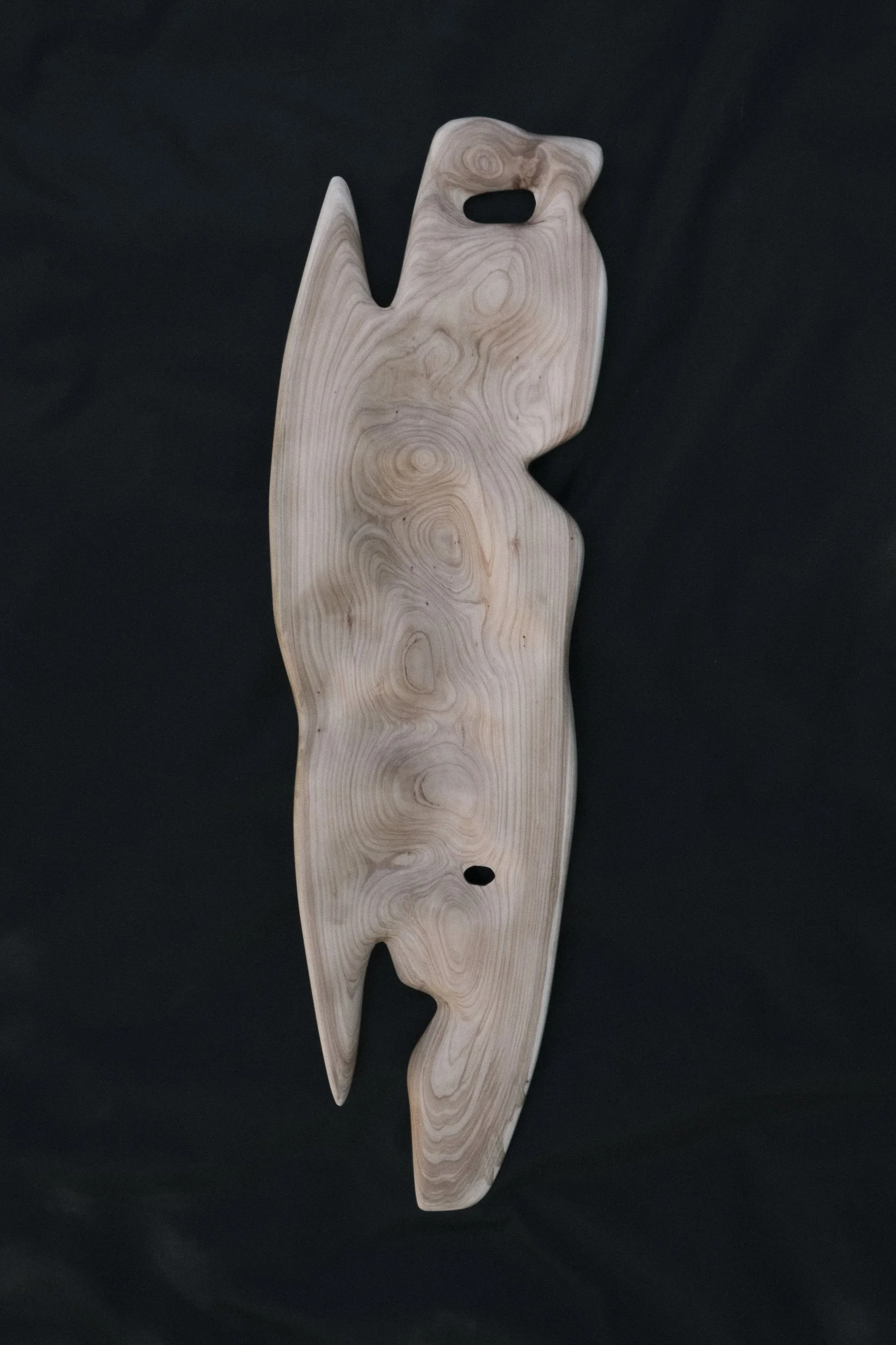
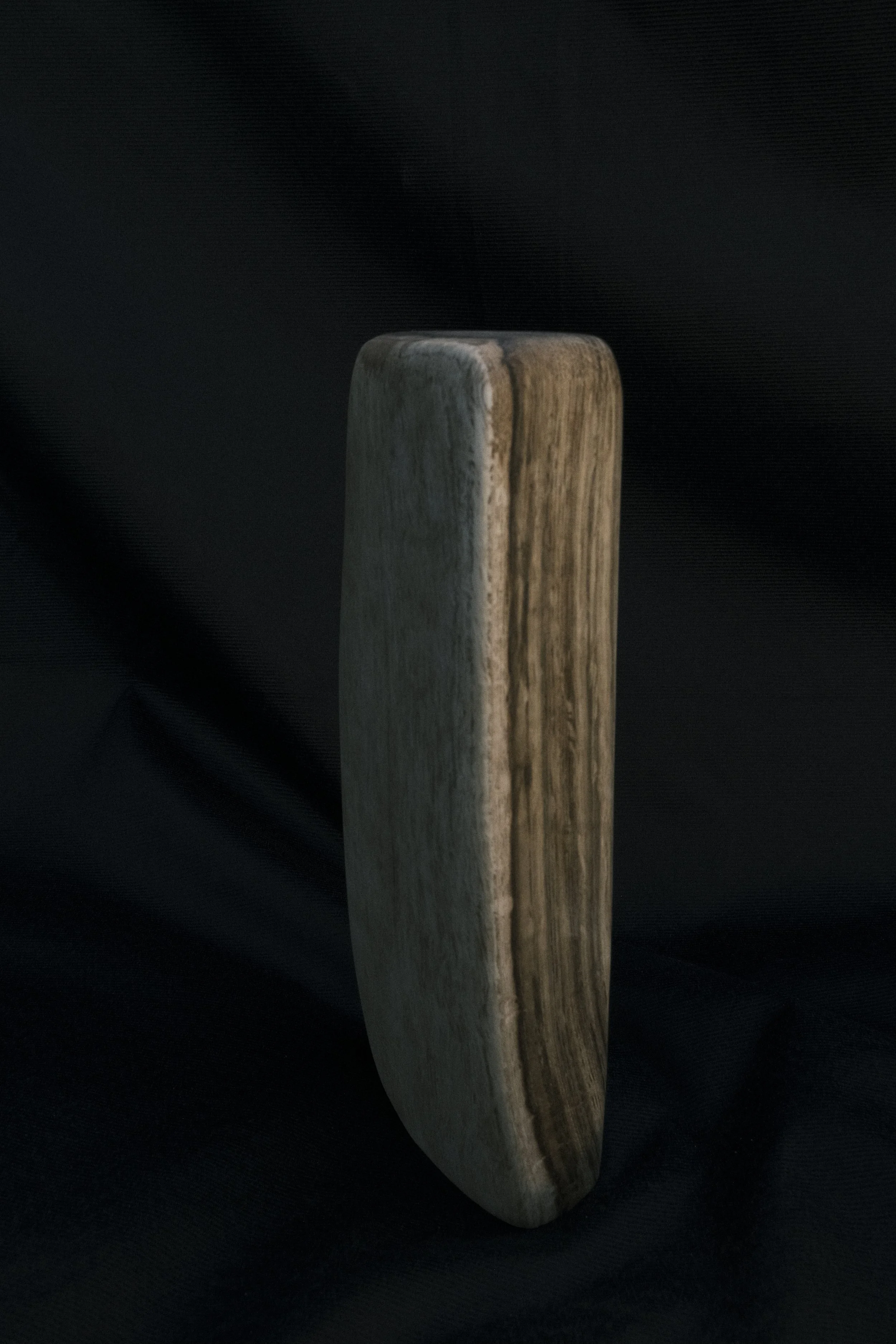
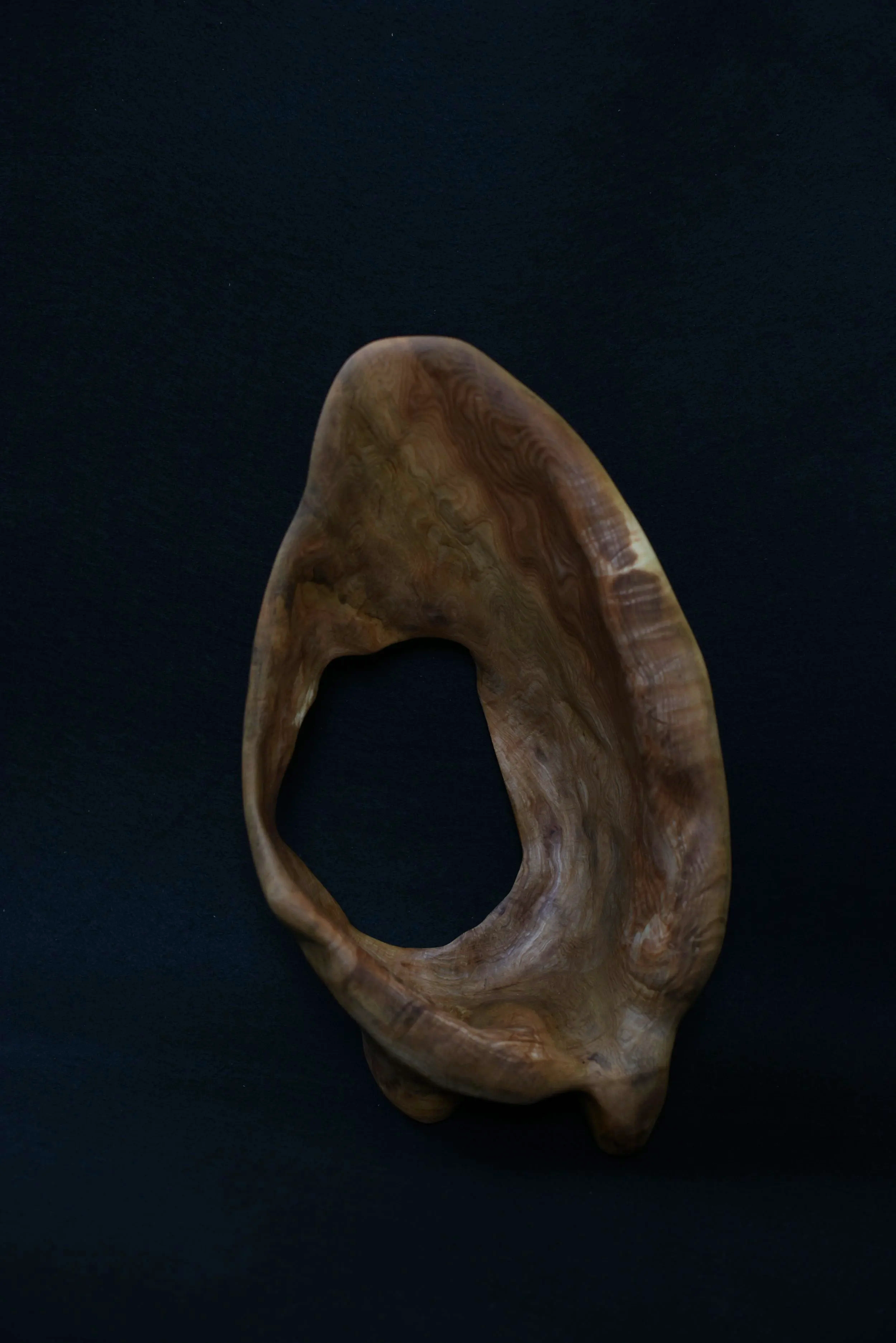
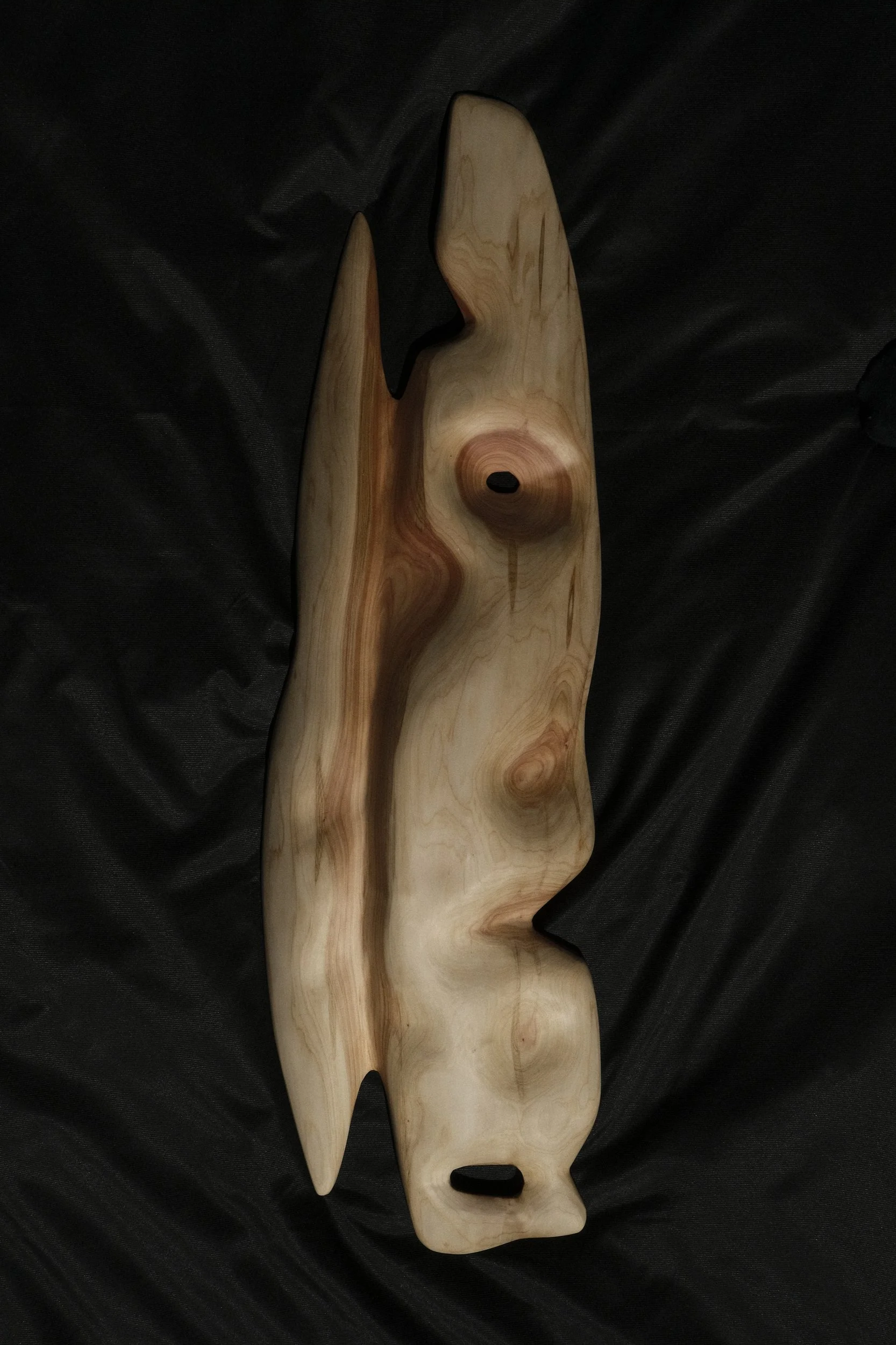
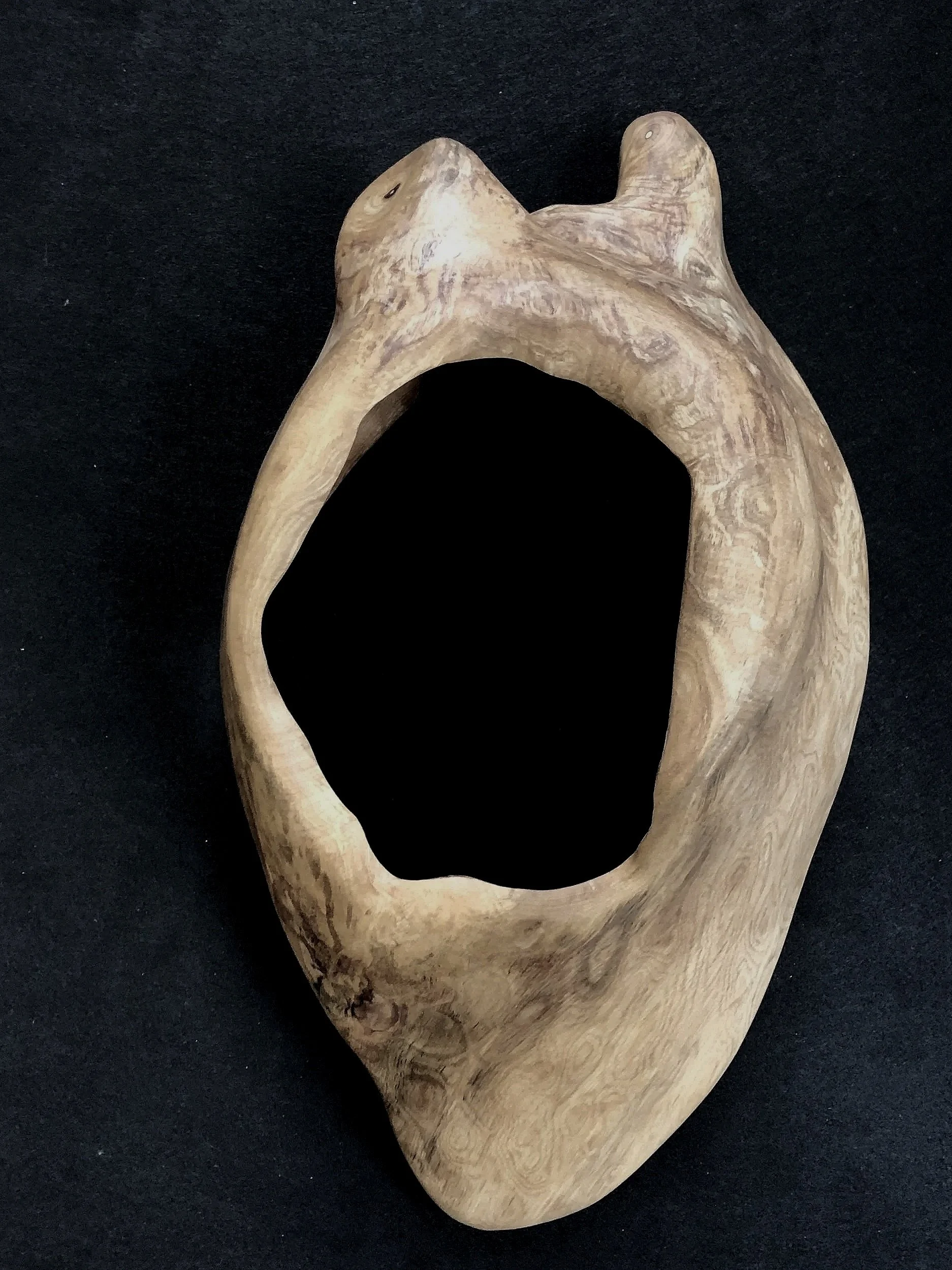
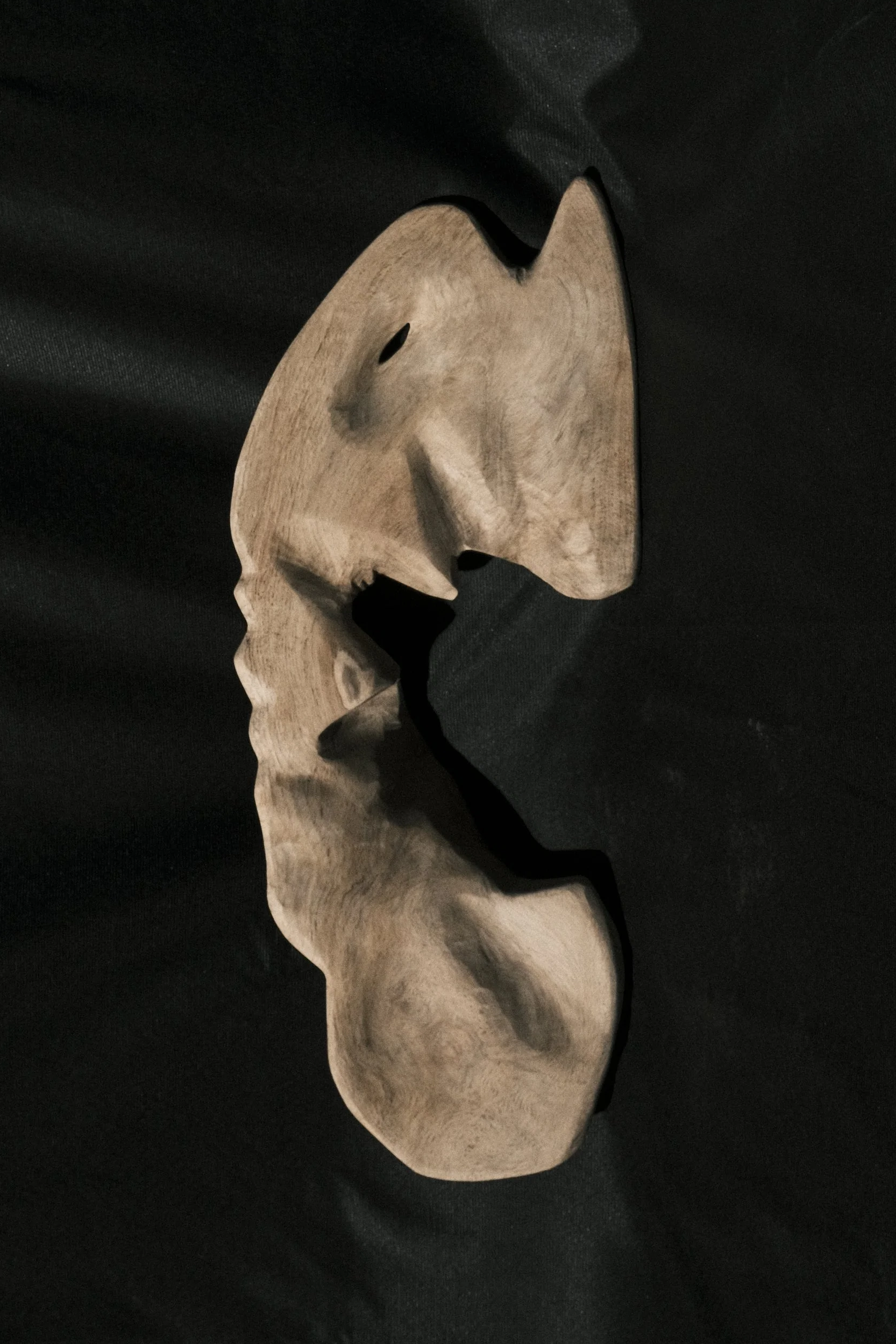
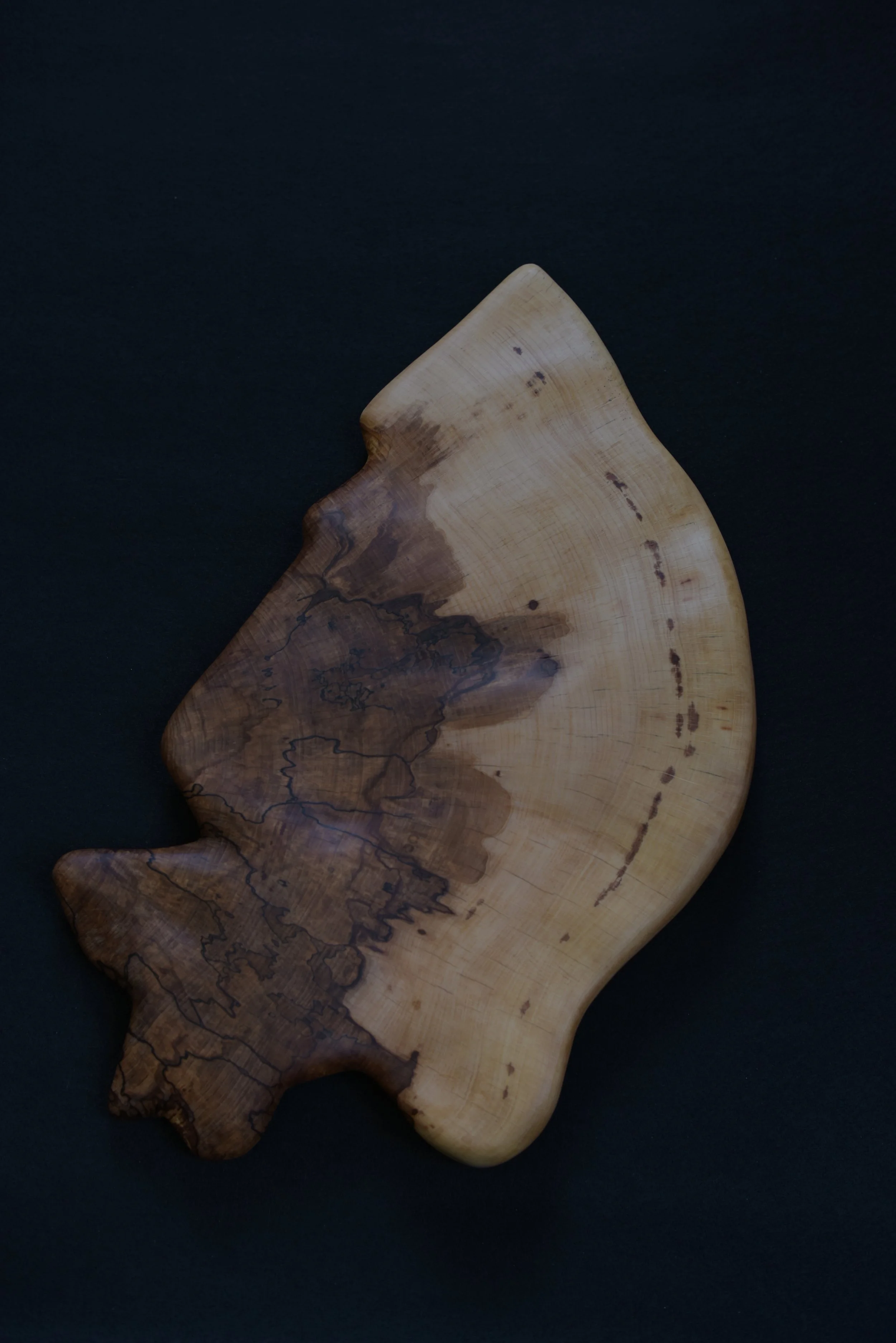
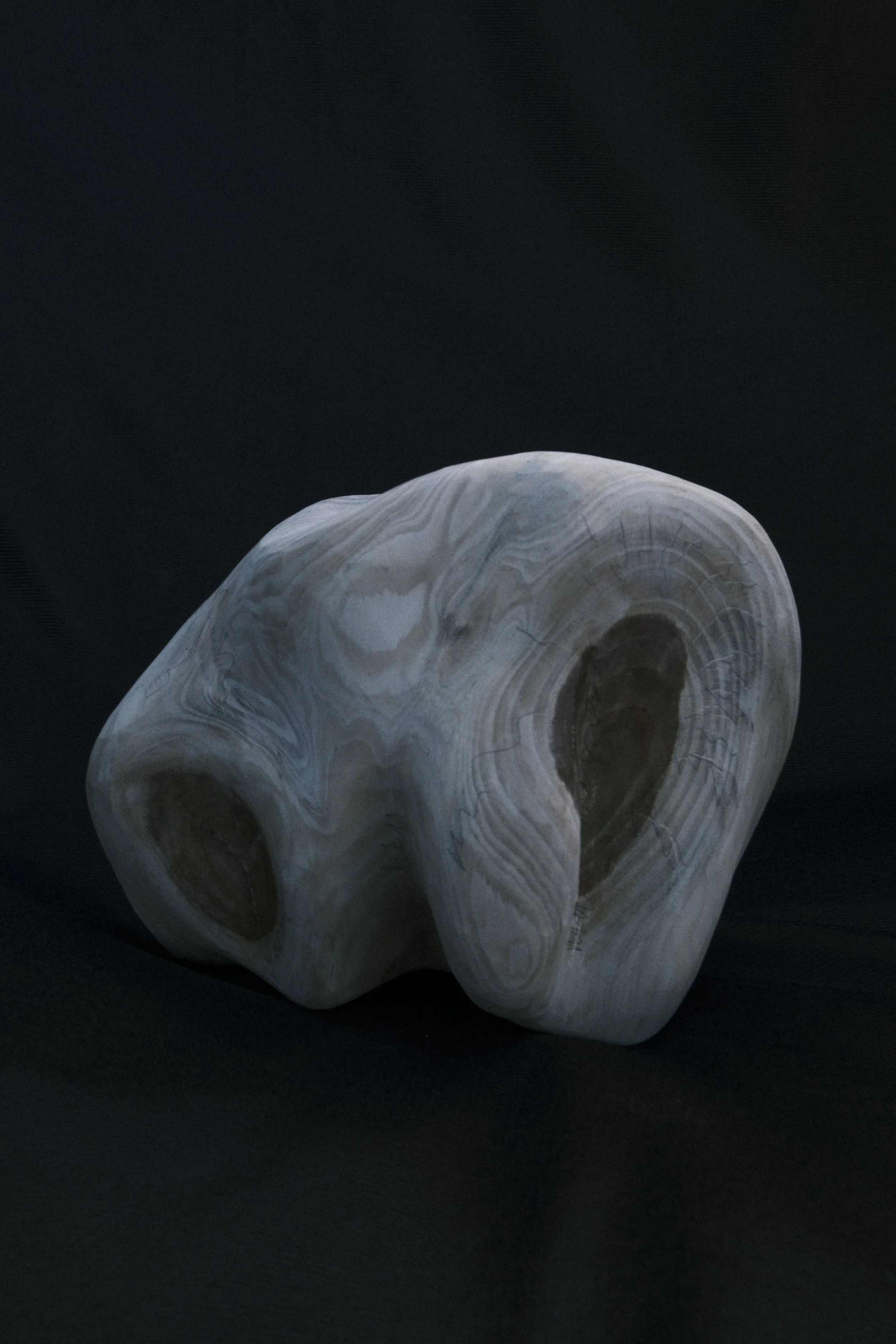
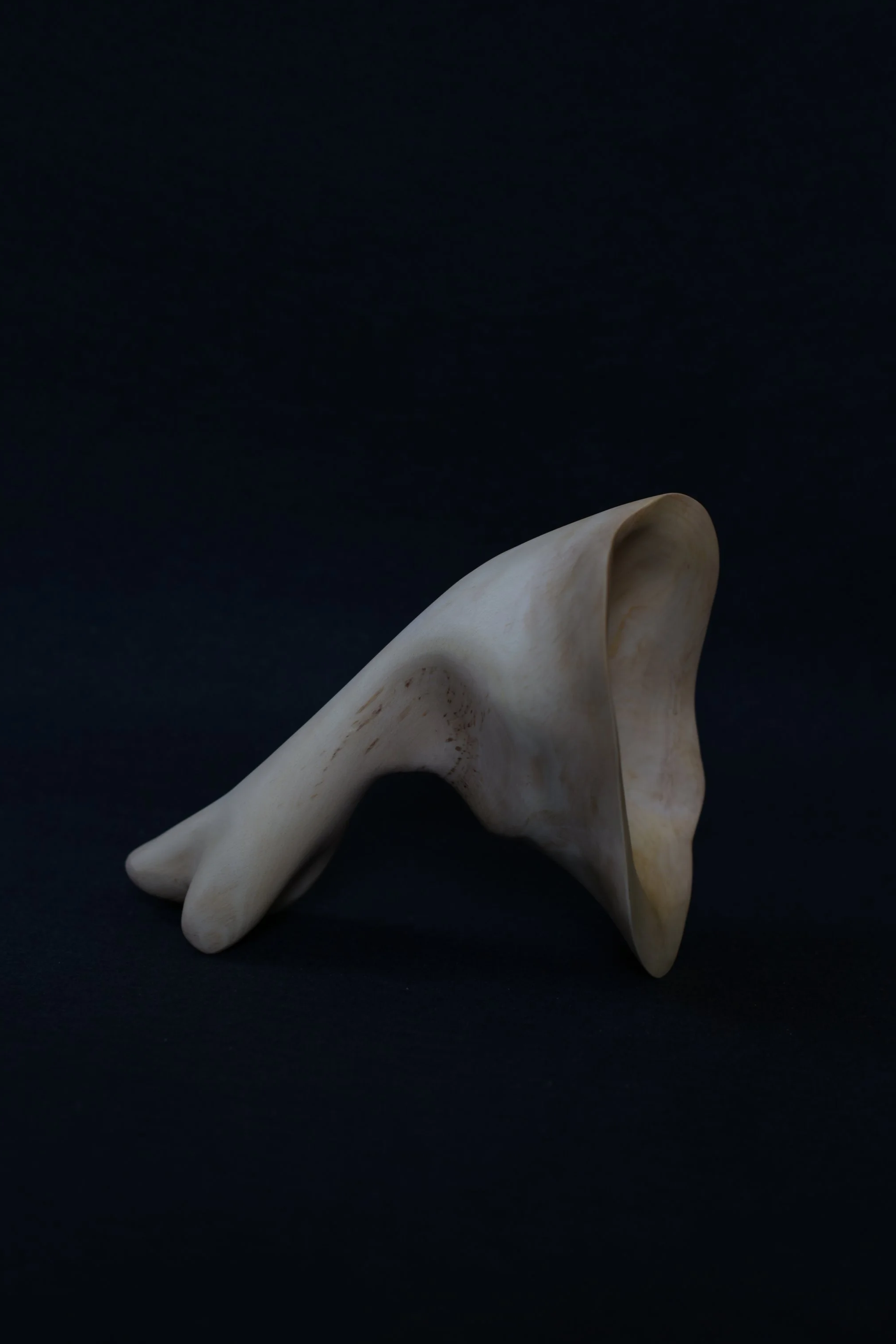
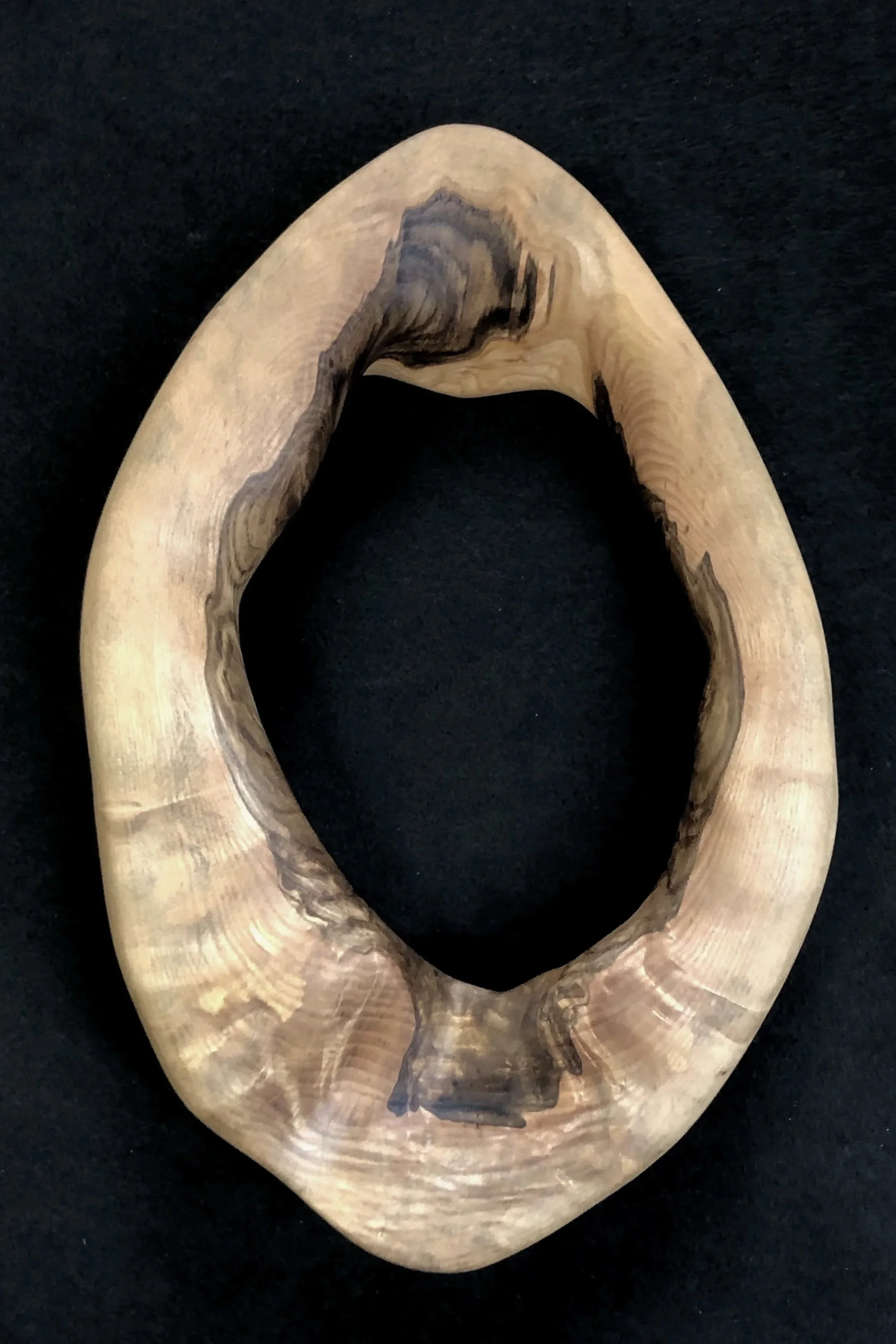
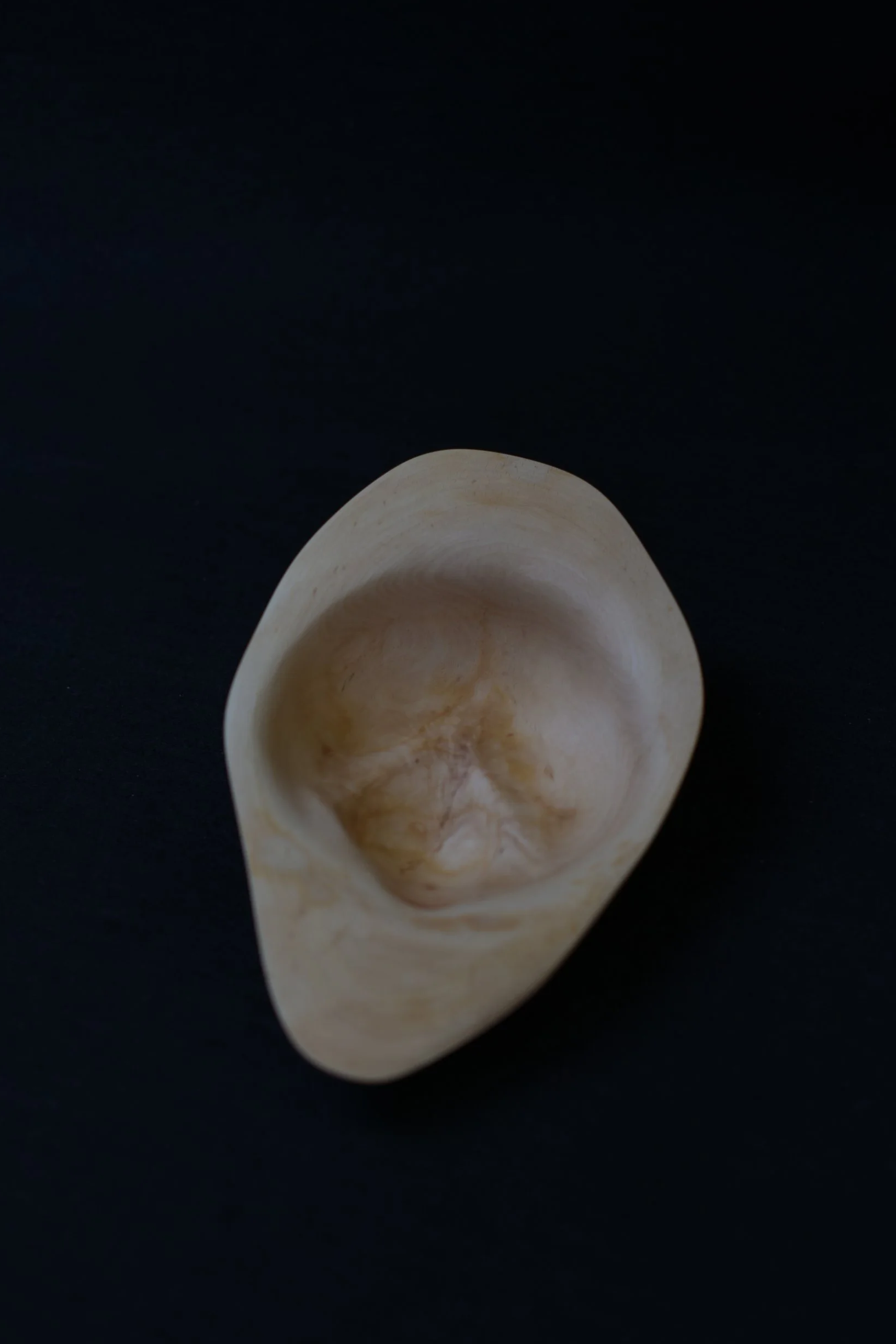
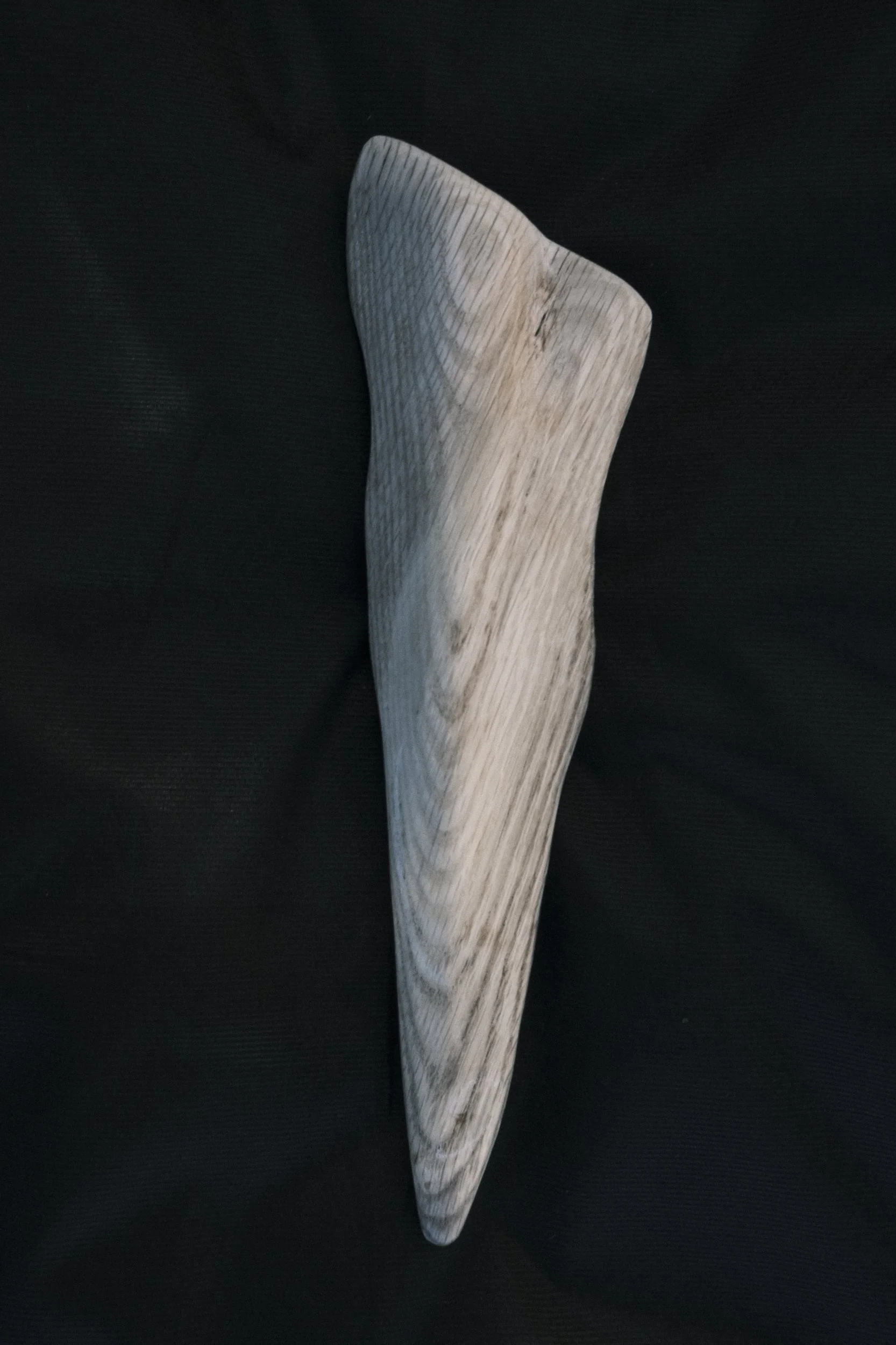
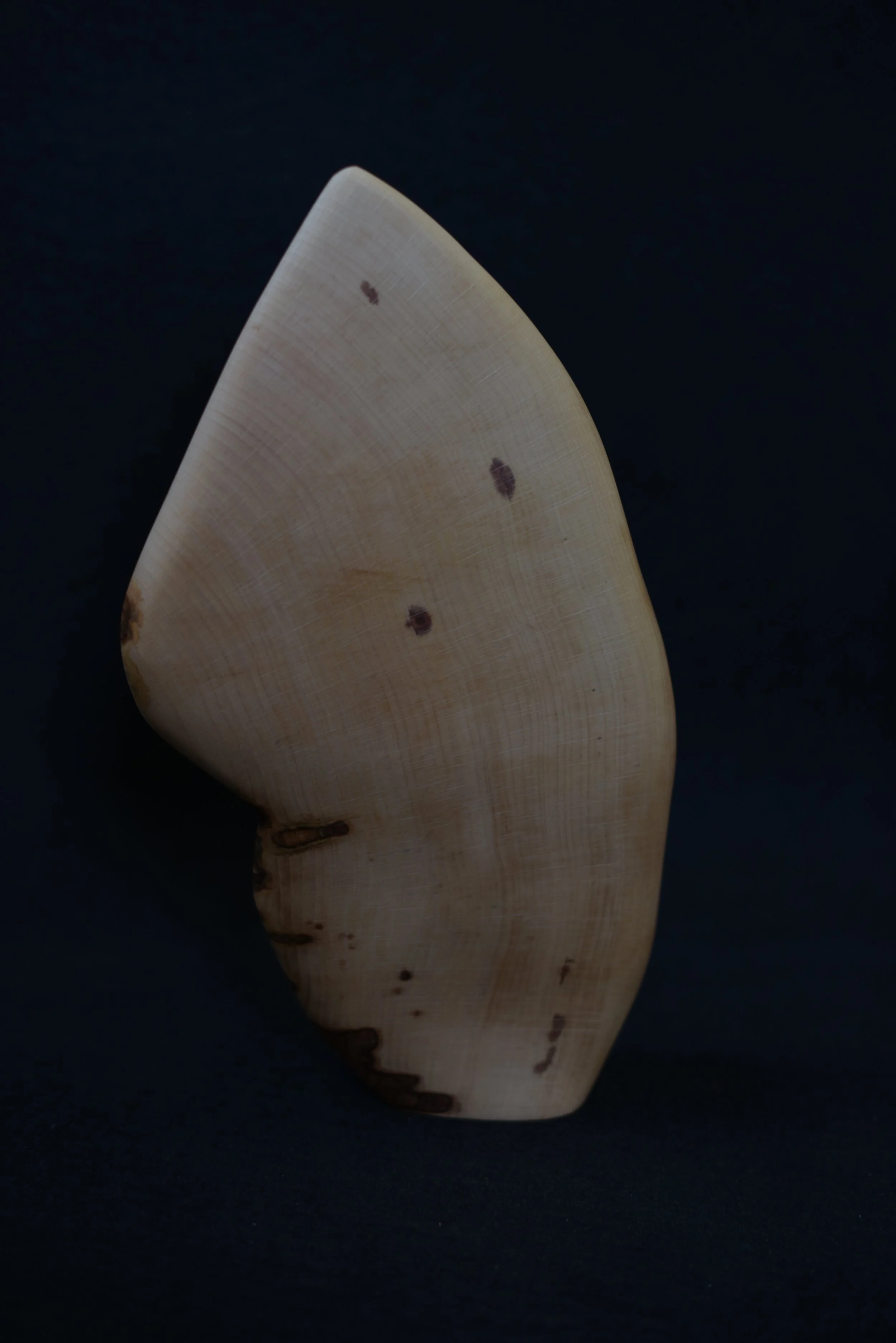
Archaeological Woodworking is an artistic research project in pursuit of finding and highlighting value. If life is invaluable, then the best way to honor a tree is to use as much of its wood as possible. This project works exclusively with offcuts from the felling of trees and milling of lumber, finding value in waste.
After collection, preservation becomes the priority. Elements that jeopardize the longevity of each piece (insects, rot, bark inclusions, cracks…) are excavated with an angle grinder. As material is removed and the piece dries, pressure stored in the wood is released and new cracks form. These are subsequently removed until the piece stabilizes.
A dialogue is formed between the material and sculptor, with each reacting to the another. The final forms are a result of this process as opposed to artistic expression. Offcuts (logs, wedges, skims, cookies) become their own sculptural typologies (totems, vessels, maps).
Each object is sanded and finished to the same standards as a piece of fine furniture.